
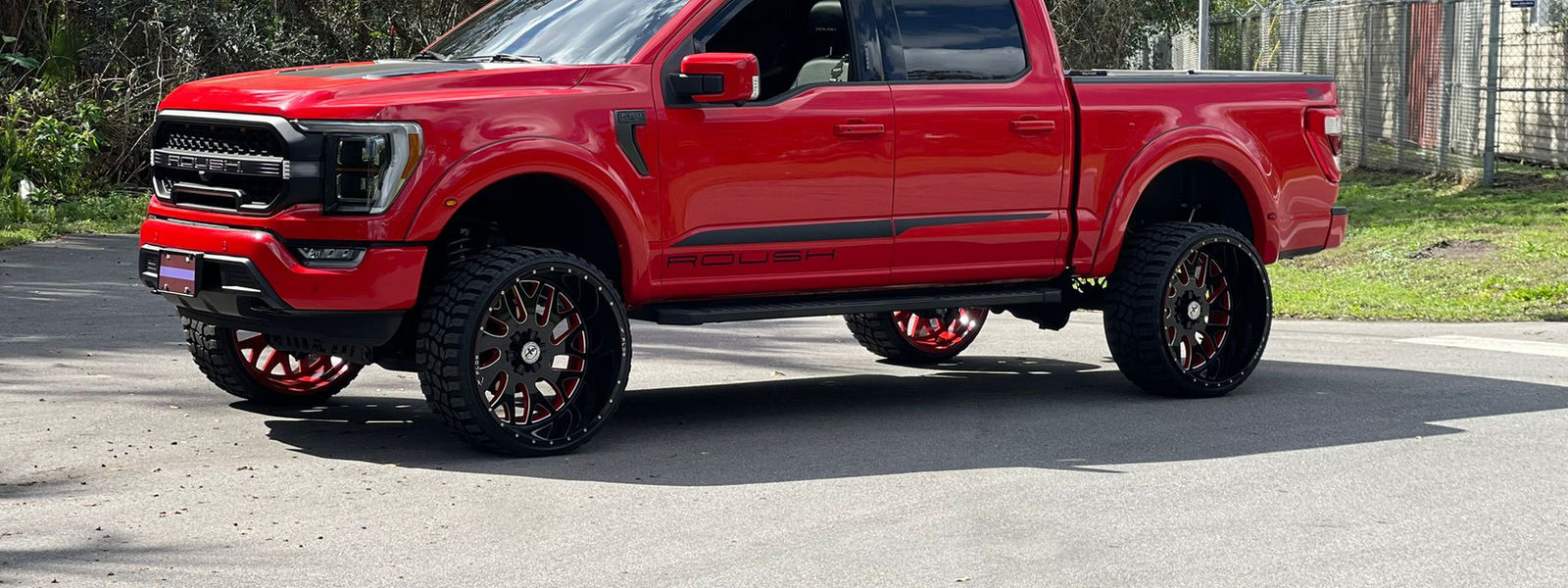
Two wheels can share the same diameter and width and still put a tire in very different places. The measurements that decide where the tire ends up are offset and backspacing. If you are shopping for aftermarket wheels, these two numbers matter as much as the style.
Offset in plain terms
Picture a line running down the middle of the wheel from top to bottom, exactly halfway across its width. Offset is the distance from that centerline to the surface where the wheel bolts against the hub, measured in millimeters.
- Positive offset means the mounting surface sits toward the outside face of the wheel. The wheel tucks in toward the suspension. Most factory wheels on modern trucks have positive offset.
- Zero offset means the mounting surface sits right on the centerline.
- Negative offset means the mounting surface sits toward the inside, so the wheel and tire push outward, past the fender. That deep-dish look comes from negative offset.
Backspacing in plain terms
Backspacing is the distance from the mounting surface to the inner edge of the wheel, usually measured in inches. It tells you how much of the wheel and tire sit inboard of the hub, toward the brakes, suspension and frame. Less backspacing pulls the wheel outward; more backspacing tucks it in. Offset and backspacing describe the same idea from different reference points, and with the wheel width you can convert one into the other.
Why it matters on a lifted truck
Larger, wider tires need room on the inside to clear the upper control arm, strut, tie rods and frame at full steering lock. A wheel with less backspacing moves the tire away from those parts. Go too far, though, and the tire sticks out past the fender, where it can rub the fender lip, throw water and debris along the side of the truck and may run against local equipment rules for tire coverage.
The trade-offs of pushing wheels out
- Steering feel. Moving the tire's contact patch farther from the steering axis changes scrub radius. You may feel more kickback over bumps and heavier steering.
- Wear. A wheel pushed outward acts like a longer lever on the wheel bearing and ball joints, which can shorten their life.
- Stability and width. A wider track can feel more stable, which is part of why the look is popular.
- Fender coverage. Some owners add fender flares to cover a wider stance.
None of this means a negative-offset wheel is wrong. It means the choice should be made on purpose, with the lift height, tire width and steering components in mind.
Wheel spacers
Spacers bolt between the hub and the wheel to push it outward without changing the wheel. Quality hub-centric spacers installed and torqued correctly are common on trucks, but they add the same leverage effects as a lower-offset wheel and need periodic checks.
How we approach it
When a customer comes in for wheels and tires, we start with the tire they want and the truck they have, then look at the lift or level that is planned, the brake caliper clearance behind the spokes and how far out they want the tire to sit. Changing one number changes the others, so it pays to plan the lift kit and wheel together rather than buy one and hope the other works.
If you are comparing wheels and unsure which offset to pick, book an appointment or call High Profile 4x4 at (386) 366-2209. We can show you what each option means for your specific truck before you spend a dollar.
